


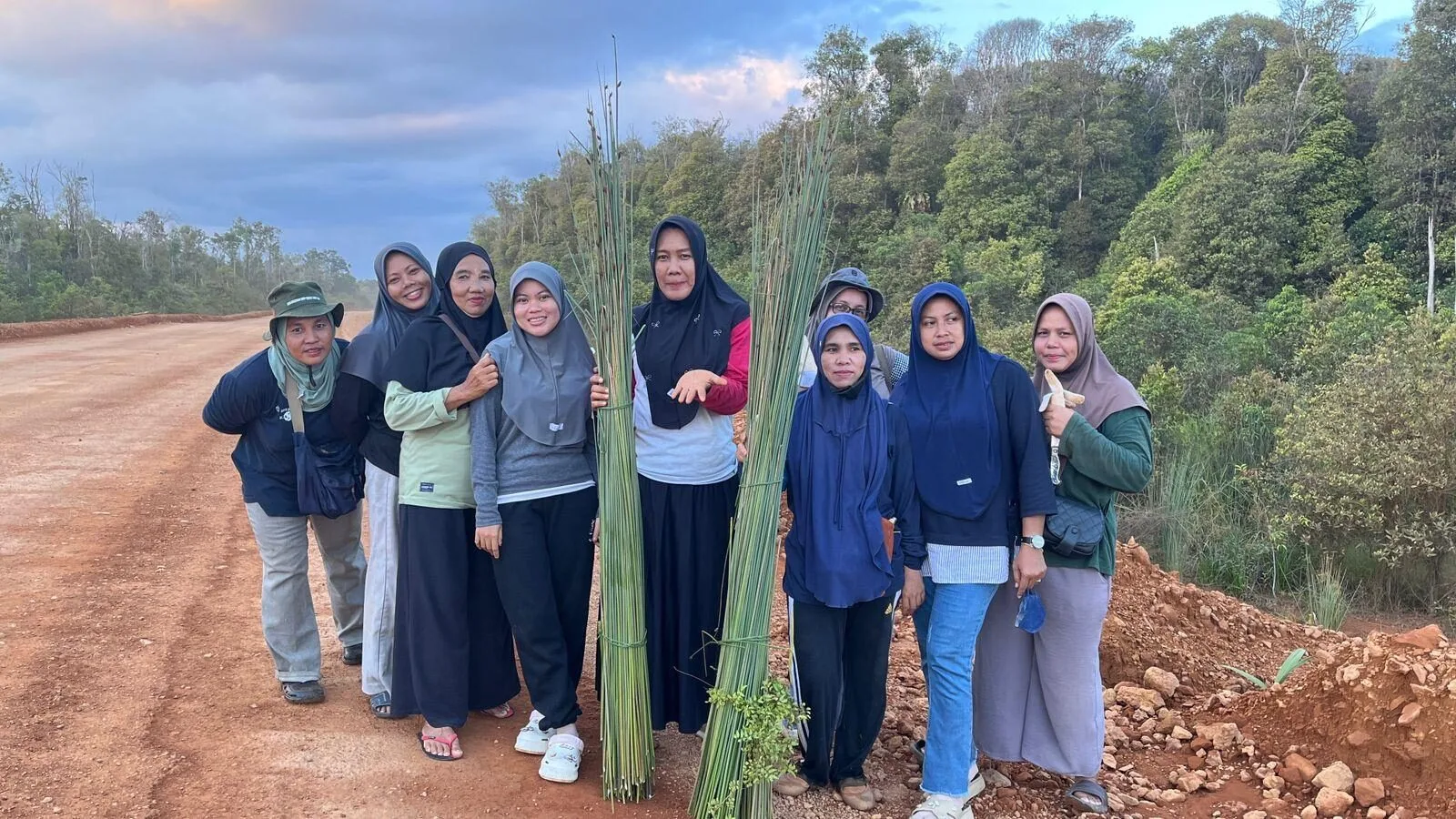

On the edge of the Tayan Hilir peat forest in Sanggau Regency, the sound of the wind passing through the purun clumps testifies to the lives of dozens of farming families. In this fire-prone and often considered unproductive area, purun thrives and serves as a mainstay of the local economy. However, without proper support, the enormous potential of this valuable wild plant remains far from optimal.
Purun: A Wild Plant That Supports the Economy
Purun (Lepironia articulata) is more than just a swamp plant for local people. This craft material has become a primary source of income, especially for farming families living around peat forests.
Every morning, farmers walk through the damp peatlands to harvest young purun (purun) ready for processing. A single bundle of purun may seem simple, but in the hands of female artisans, it can be transformed into valuable products such as mats, bags, and even the increasingly popular eco-friendly straws.
Challenges on the Ground: Access, Markets, and Sustainability
Despite having great potential, farmers and artisans face a number of obstacles:
-
Lack of direct market access, making the price of raw purun often unstable.
-
Lack of processing training, so that the finished product has limited sales value.
-
Peatland conditions are prone to fire, making production continuity dependent on weather conditions.
-
Limitations of simple tools and technology, especially in the drying and coloring processes.
"We want purun to be better valued. So far, many middlemen have been setting prices," he said. Mother Lani, one of the purun craftsmen in Tayan Hilir.
Empowerment Initiatives: From Training to Market Access
A number of youth organizations and local communities have begun to step in to provide training, mentoring, and open marketing networks.
Kalimantan Muda Indonesia (KMI) is one of the parties promoting sustainable empowerment. Through its purun-based craft mentoring program, KMI:
-
Organize weaving and product innovation workshop,
-
Help quality standardization,
-
Connecting artisans with MSME business actors,
-
And involve craftsmen in creative economy exhibition.
This approach not only increases the income of farmers and craftsmen, but also strengthens purun's position as a superior, environmentally friendly commodity.
A Green Economy Based on Local Wisdom
Purun grows naturally without the need for fertilizers or pesticides, making it highly relevant to the now-mainstream green economy concept. Purun's use also helps keep peatlands moist and prevents fires—an often overlooked ecological benefit.
"When the demand for purun increases, people have a reason to protect peatlands instead of burning them," he said. Arif Pratama, an environmental activist involved in research into the use of purun.
The Future of Purun: From Village to Global Market
With the growing interest in eco-friendly products in both national and international markets, purun has significant potential to become a future commodity. Products such as purun straws, purun rattan bags, and even home decor are now in high demand.
However, to reach a wider market, it is necessary:
-
Consistent production system,
-
Environmentally friendly certification,
-
Strong branding,
-
As well as a sustainable empowerment model that involves the younger generation.
Empowering purun farmers in Tayan Hilir is not only about improving the village economy, but also maintaining the sustainability of the peat ecosystem and preserving local craft traditions.
With collaboration between communities, youth organizations, local governments, and businesses, purun can become a symbol of West Kalimantan's green economic revival — starting from a simple clump growing in the Tayan Hilir peatlands.




 Bahasa Indonesia
  English